



Introduction
Elbow pain is more common than most people realize. Whether you are a competitive tennis player, a weekend golfer, a weightlifter, or someone who spends eight hours a day typing at a desk - your elbows absorb a significant amount of daily stress. When that stress accumulates, the result is discomfort, inflammation, and reduced performance that affects everything you do.
The market for elbow support products has grown considerably in recent years. Two options dominate the conversation: the copper compression elbow sleeve and the traditional elbow brace. Both are designed to support the elbow joint - but they work differently, feel different, and are built for different situations.
By the end of this article, you will understand:
Copper Comfort You Can Trust — 60 Days Risk Free Guarantee
- Save $20.00
- Save $7.00

- Save $10.00


How copper compression elbow sleeves and traditional elbow braces work
The key differences in comfort, support, and recovery
Which option is better for your specific activity or condition
How to choose the best elbow compression sleeve for daily use
When a traditional elbow brace is the right call

What Is a Copper Compression Elbow Sleeve?
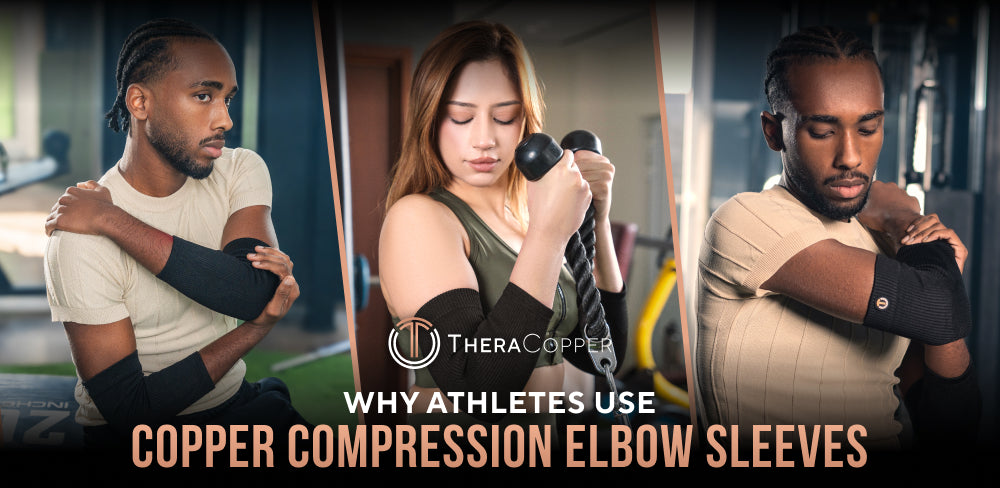
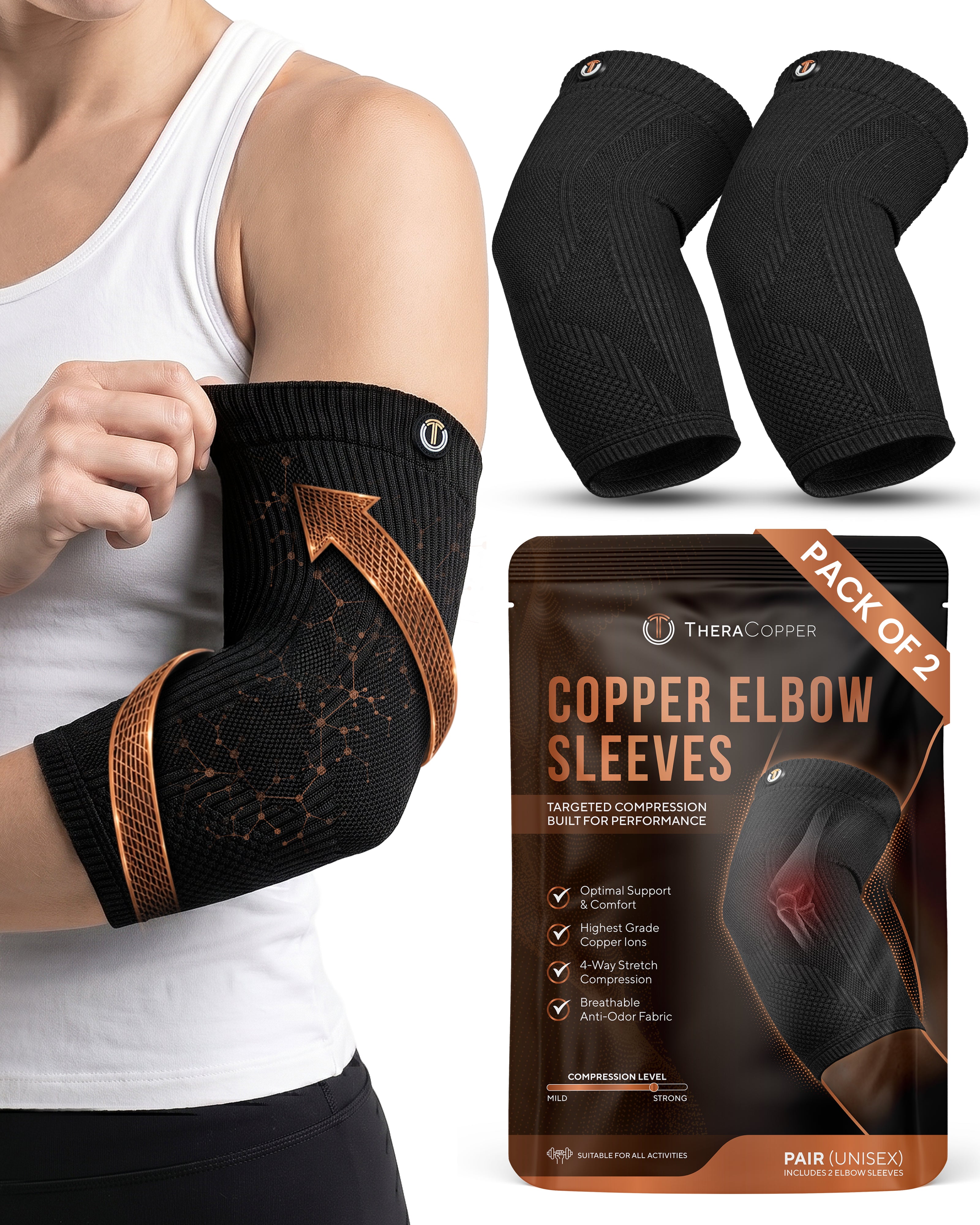
A copper compression elbow sleeve is a flexible, form-fitting garment worn around the elbow joint. It is constructed from high-performance elastic fibers woven together with genuine copper-infused threads - creating a sleeve that provides both mechanical compression and the natural properties of copper directly at the skin level.
Unlike rigid supports that lock the joint in place, a copper elbow sleeve is designed to move with your body. It stretches, flexes, and follows the arm through its full range of motion - which is precisely why athletes, active workers, and daily users prefer it over bulkier alternatives.
How Compression Works
Compression applies consistent, graduated pressure around the joint and surrounding soft tissue. This external pressure:
-
Reduces fluid accumulation in inflamed or overworked tendons and bursae
-
Supports the joint capsule during gripping, twisting, and extending motions
-
Improves blood flow to the compressed area, accelerating oxygen and nutrient delivery
-
Enhances proprioception - your body's internal sense of joint position - reducing micro-injury risk
The Role of Copper-Infused Fabric
Copper is a naturally antimicrobial metal. When woven into compression fabric in sufficient concentrations, copper fibers work actively against odor-causing bacteria and maintain a cleaner microenvironment at the skin surface during extended wear.
The critical distinction: Not all copper elbow sleeves contain meaningful copper content. Many products carry copper branding without verified copper concentration. TheraCopper sleeves are third-party tested for copper content - because if the copper cannot be proven, the claim should not be made.
Who Uses Copper Compression Elbow Sleeves?
-
Tennis players managing lateral epicondylitis (tennis elbow)
-
Golfers managing medial epicondylitis (golfer's elbow)
-
Weightlifters supporting joint stability during heavy compound movements
-
Office workers managing repetitive strain from typing and mouse use
-
Seniors seeking low-profile, comfortable daily joint support
-
Anyone recovering from elbow overuse injuries who needs to stay active during rehabilitation
What Is an Elbow Brace?
A traditional elbow brace is a structured support device - typically incorporating rigid or semi-rigid components such as metal stays, plastic shells, or dense foam padding - designed to limit joint movement and protect specific anatomical structures.
Elbow braces come in several forms depending on their intended purpose:
-
Counterforce braces: A strap-style brace wrapping just below the elbow to offload stress from tendon attachment points. Commonly used for tennis elbow and golfer's elbow.
-
Hinged elbow braces: A more substantial brace with mechanical hinges allowing controlled flexion and extension while preventing hyperextension. Used post-surgery or for ligament instability.
-
Compression elbow braces: A hybrid design combining sleeve-style compression with added padding, strapping, or structural reinforcement.
-
Immobilization splints: Rigid devices designed to hold the elbow in a fixed position, typically following surgery or acute injury.
Limitations of Traditional Elbow Braces
-
Rigid or semi-rigid designs restrict natural range of motion
-
Bulkier profile makes them impractical under clothing
-
Less breathable - particularly foam-backed and strapped designs
-
Not suited for extended daily wear in active or professional settings
-
Focal pressure rather than graduated compression can be uncomfortable over time
Copper Compression Elbow Sleeve vs Elbow Brace - Full Comparison
|
Feature |
Copper Compression Elbow Sleeve |
Traditional Elbow Brace |
|
Comfort |
High - soft fabric, no pressure points |
Moderate - rigid components can cause discomfort |
|
Compression |
Graduated, circumferential - full joint |
Focal or partial - targeted structures only |
|
Flexibility |
Full range of motion maintained |
Restricted - particularly with hinged designs |
|
Mobility |
Excellent - designed for active movement |
Limited - suited for rest or controlled movement |
|
Breathability |
High - moisture-wicking, open-weave fabric |
Low to moderate - foam and strapping reduce airflow |
|
Daily Wear |
Ideal - low-profile, fits under clothing |
Impractical for most daily activities |
|
Athletic Performance |
Enhances - supports without restricting |
Reduces - limits movement and feels bulky |
|
Recovery Support |
Continuous - compression active all day |
Passive - only benefits joint when worn at rest |
|
Durability |
High - compression maintained through wash cycles |
Varies - straps and padding degrade with use |
|
Appearance |
Sleek, discreet, professional |
Visible, clinical, bulky |
|
Cost Effectiveness |
High - reusable, long lifespan |
Moderate - may require replacement over time |
Bottom line: For daily wear, active use, and ongoing recovery - the copper compression elbow sleeve is the superior choice for the vast majority of users. A traditional elbow brace is appropriate in clinical or post-surgical contexts where joint restriction is medically indicated.
Benefits of Wearing a Copper Compression Elbow Sleeve
Improved Blood Circulation
Graduated compression creates a pressure gradient that supports venous return - the flow of blood back from the limb toward the heart. Improved circulation means faster delivery of oxygen and nutrients to working muscles and tendons, more efficient clearance of metabolic waste, and reduced post-exercise soreness.
Joint Stability
The elbow combines three bones stabilized by multiple ligaments, tendons, and muscle groups. A copper compression elbow sleeve provides external stabilization through consistent circumferential compression - supporting the joint during movement and reducing the micro-instability that leads to progressive tendon damage and pain amplification.
Muscle Recovery Support
Compression supports recovery by limiting exercise-induced swelling, maintaining tissue temperature, and reducing soft tissue oscillation during movement - decreasing micro-trauma accumulation. Wearing a copper elbow sleeve during recovery days and daily tasks keeps the recovery environment optimized.
Reduced Muscle Fatigue
When forearm and upper arm muscles tire, they transfer load to the passive structures - ligaments, tendons, and joint capsule - which are not designed to absorb dynamic forces over extended periods. Compression reduces muscle fatigue by improving proprioceptive feedback and supporting the muscle groups around the joint.
Better Athletic Performance
By improving joint stability, reducing fatigue, and maintaining tissue temperature, a copper compression elbow sleeve allows athletes to sustain higher output for longer. Tennis players maintain swing accuracy later in the match. Golfers maintain grip pressure across eighteen holes. Weightlifters perform movements with greater joint confidence.
Comfortable All-Day Wear
TheraCopper sleeves are engineered for extended daily wear with no seam ridges against the skin, no straps that dig in during flexion, no rigid edges that restrict movement, and smooth breathable fabric that regulates temperature across activity levels.
Lightweight Design
The sleeve weighs almost nothing. Compare this to the weight and bulk of a traditional hinged elbow brace during a tennis match, a long workday, or a full training session. Lightweight design means you stop noticing the sleeve is there - which is exactly what you want from a daily support product.
Breathability and Moisture Control
TheraCopper's copper-infused fabric uses moisture-wicking construction that draws perspiration away from the skin surface. This keeps the skin dry and comfortable, reduces odor buildup, and prevents the skin irritation that occurs when moisture is trapped against the skin under a non-breathable support.
Everyday Joint Protection
Daily wear provides ongoing protective compression that reduces cumulative stress placed on the joint through repetitive activities - typing, driving, cooking, gardening, and dozens of other low-intensity movements that collectively drive overuse injury development.
Long-Term Support
Unlike pharmaceutical pain management, compression support has no tolerance buildup, no systemic side effects, and no dosage limit. You can wear your elbow brace compression sleeve every day for months without diminishing returns - provided the sleeve maintains its compression rating.

Benefits of Traditional Elbow Braces
-
A balanced guide acknowledges when traditional elbow braces are the right tool. Genuine strengths of rigid or structured braces:
-
Acute injury management: Immediately following a ligament sprain, fracture, or dislocation, a rigid splint or hinged brace provides structural restriction that a flexible sleeve cannot.
-
Post-surgical recovery: After elbow surgery, a hinged brace with controlled range of motion is the clinical standard.
-
Severe tendinopathy: In cases where the clinician determines load redistribution is required, a counterforce strap brace can offload the specific tendon attachment point.
-
Contact sport impact protection: In sports where direct impact to the elbow is a risk, a padded rigid brace provides mechanical protection a fabric sleeve cannot replicate.
Which Is Better for Tennis Elbow?
Tennis elbow (lateral epicondylitis) involves micro-tears and degeneration at the tendon attachment of the forearm extensor muscles at the lateral epicondyle.
How a Copper Compression Elbow Sleeve Helps
-
Provides circumferential compression that reduces swelling around the lateral epicondyle
-
Improves local blood circulation to the tendon attachment - supporting repair
-
Reduces muscle fatigue in the forearm extensors, limiting load transfer to the tendon
-
Maintains joint warmth during play, reducing tissue stiffness
-
Suitable for all-day wear including during the workday, practice sessions, and recovery
Recommendation
For most tennis elbow sufferers in the subacute or chronic phase, a copper compression elbow sleeve worn daily provides broader and more comfortable benefit than a strap brace that only addresses one anatomical point. In the acute phase, a counterforce strap brace during activity combined with a copper sleeve for recovery periods is an effective combined approach.
Which Is Better for Golfers?
-
Golf-related elbow discomfort - medial epicondylitis (golfer's elbow) - affects the tendon attachment on the inner elbow, stressed by repeated gripping, wrist flexion, and forearm rotation of the golf swing.
-
Full range of motion maintained - critical for an unimpeded swing
-
Graduated compression supports the forearm flexor muscle group throughout the round
-
Reduced fatigue on the back nine, where grip pressure and technique often deteriorate
-
Moisture-wicking performance keeps the sleeve comfortable through 18 holes
-
Low-profile design fits comfortably under a golf glove and sleeve
-
Recommendation: A copper elbow sleeve is the clear choice for active golfers. A traditional brace is better suited to post-round recovery or rest periods.
Which Is Better for Weightlifting?
-
Weightlifting places direct compressive and tensile load on the elbow joint through pressing and pulling movements. Elbow pain in lifters typically involves the tricep tendon insertion, the bicep tendon, or the epicondyles.
-
Maintains joint warmth during the warm-up phase - reducing injury risk at the start of a session
-
Provides proprioceptive support during heavy compound movements
-
Graduated compression reduces post-workout swelling and inflammation
-
Allows full elbow flexion and extension - unlike rigid braces that restrict the lifting range of motion
-
Suitable for pre-hab and rehab phases without interrupting training
-
Recommendation: For regular training support and recovery, the best elbow compression sleeve for weightlifters is a copper-infused compression sleeve worn from warm-up through cool-down.
Which Is Better for Office Workers?
-
Office workers are among the largest and most underserved populations for elbow support. Repetitive strain from typing, mouse use, and sustained forearm positioning creates cumulative load on the lateral epicondyle.
-
Thin, low-profile design fits under business attire without drawing attention
-
Comfortable enough to wear for an 8-10 hour workday without removing
-
Provides ongoing compression that addresses the cumulative nature of desk-related elbow strain
-
Moisture-wicking performance keeps the sleeve comfortable through a full office day
-
Helps break the repetitive strain cycle by supporting the joint continuously
-
Recommendation: A copper elbow sleeve is the most practical and effective daily solution for office workers managing elbow discomfort from repetitive desk use.
Who Should Wear an Elbow Support Sleeve?
-
An elbow support sleeve is appropriate for a broad range of users. If any of the following descriptions match your situation, daily copper compression is worth considering:
-
Athletes: Anyone engaged in racquet sports, golf, climbing, throwing sports, or strength training who places repetitive load on the elbow joint
-
Tennis players: Managing lateral epicondylitis, preventing its development, or maintaining performance across long match and training schedules
-
Golfers: Protecting the medial epicondyle through a full round and supporting recovery between playing days
-
Weightlifters: Supporting the elbow through compound pressing and pulling movements and accelerating post-workout recovery
-
Office workers: Breaking the repetitive strain cycle from sustained typing and mouse use
-
Seniors: Managing age-related joint changes and chronic low-grade elbow discomfort with a comfortable, non-invasive daily support option
-
Active adults: Anyone who notices elbow discomfort during or after regular activities - hiking, gardening, DIY projects, cooking
-
Post-rehabilitation: Those transitioning back to activity after an acute elbow injury
How to Choose the Best Elbow Compression Sleeve
Material Quality
Look for a sleeve constructed from high-grade compression yarn - typically a blend of nylon, spandex, and copper-infused fibers. The fabric should maintain its structure after repeated washing without losing elasticity or shape.
Copper-Infused Fabric
The copper content must be verified by third-party laboratory testing - not just stated on the packaging. Ask for test documentation. A brand that cannot produce it is making an unverified claim. TheraCopper provides third-party test documentation for all copper content in our products.
Compression Level
Light compression (8-15 mmHg): Suited for daily preventive wear, mild discomfort, and desk-based use
Moderate compression (15-25 mmHg): Appropriate for active sport use, post-exercise recovery, and moderate tendinopathy management
Firm compression (25+ mmHg): For acute swelling management - typically under clinical guidance
Breathability
Extended wear requires effective moisture management. Look for open-weave or moisture-wicking fabric construction. Closed-cell or rubber-based materials will cause skin irritation and discomfort during active or extended wear.
Comfort
Test the sleeve for pressure points at the edges, seam ridges against the skin, and whether it bunches at the elbow crease during flexion. A quality sleeve should disappear on the body - you should stop noticing it within minutes of putting it on.
Durability
A copper elbow brace compression sleeve worn daily needs to maintain its compression and copper content through 90+ wash cycles. Ask whether the brand has documented wash performance data.
Sizing Guide
Measure your elbow circumference at the widest point when slightly bent and follow the brand's sizing chart precisely. An undersized sleeve restricts circulation. An oversized sleeve delivers no meaningful compression.
Performance Features
-
Four-way stretch construction for unrestricted movement in all planes
-
Anti-slip inner grip to prevent migration during activity
-
UV protection for outdoor sport use
-
Extended length to provide additional forearm and upper arm coverage

Signs You Need an Elbow Support Sleeve
-
Persistent joint discomfort: If your elbow aches at the end of most days regardless of activity level
-
Morning stiffness: Waking up with a stiff or aching elbow that takes time to loosen
-
Pain during specific movements: Gripping, twisting, lifting, or extending produces predictable discomfort
-
Repetitive motion strain: Daily activities involve the same elbow movements for hours
-
Swelling or warmth: Visible swelling or warmth around the elbow joint indicates active inflammation
-
Reduced grip strength: Unexplained weakness in grip accompanied by elbow discomfort
-
Recovery taking longer: Your elbow takes more than 24-48 hours to recover from training or activity
Frequently Asked Questions
Do copper compression elbow sleeves really work?
Yes. Copper compression elbow sleeves work through two evidence-supported mechanisms. The graduated compression reduces swelling, improves circulation, stabilizes the joint, and reduces muscle fatigue. The copper-infused fabric provides documented antimicrobial properties. The key is choosing a sleeve with verified copper content - not just copper branding.
What is the best elbow compression sleeve?
The best elbow compression sleeve combines verified copper content confirmed by third-party lab testing, appropriate compression level for your activity, breathable moisture-wicking fabric, accurate sizing, and quality construction that maintains compression through repeated washing. TheraCopper's copper compression elbow sleeves meet all of these criteria.
Can I wear a copper elbow sleeve all day?
Yes. A properly fitting copper compression elbow sleeve is designed for all-day wear - typically 8-12 hours. It is appropriate to wear during work, sport, and daily activities. Remove it during bathing and check periodically for signs of skin irritation or numbness.
Is an elbow brace better than a compression sleeve?
It depends on the situation. A traditional elbow brace is appropriate for acute injuries, post-surgical recovery, and clinical scenarios requiring joint restriction. For daily support, active use, ongoing recovery, and preventive wear - a copper compression elbow sleeve is superior in comfort, wearability, breathability, and practical performance.
Can a copper elbow brace help support recovery?
Yes. The compression in a copper elbow brace compression sleeve supports recovery by improving circulation to recovering tissue, reducing post-activity swelling, maintaining tissue temperature, and providing joint stability that reduces re-injury risk during return-to-activity.
Are elbow sleeves suitable for athletes?
Absolutely. Copper compression elbow sleeves are particularly well-suited for athletes because they provide meaningful joint support without restricting range of motion - making them compatible with tennis, golf, weightlifting, climbing, and most other sports.
Which is better for tennis elbow - a sleeve or a brace?
For most tennis elbow sufferers in the subacute or chronic phase, a copper compression elbow sleeve worn daily provides broader benefit than a counterforce strap brace. The sleeve delivers circumferential compression, improves circulation to the affected tendon, and is comfortable enough to wear throughout the workday and during sport.
Which is better for weightlifting - a sleeve or a brace?
A copper compression elbow sleeve is the better choice for weightlifters. It allows full range of motion through pressing and pulling movements while providing joint warmth, stability, and compression. Rigid braces restrict the elbow range of motion required for most compound lifts.
How tight should an elbow compression sleeve be?
An elbow compression sleeve should feel firm and supportive - but not restrictive. You should not feel numbness, tingling, or visible skin indentation at the sleeve edges. A correctly fitting sleeve sits securely without migrating during movement and applies even pressure without any single point of excessive tightness.
Can elbow braces be worn daily?
Traditional rigid or hinged elbow braces are generally not designed for extended daily wear outside of clinical contexts. A copper compression elbow sleeve is the more appropriate choice for daily wear - providing therapeutic compression in a format designed for all-day comfort.
Key Takeaways
Copper compression elbow sleeves provide graduated circumferential compression, copper antimicrobial benefits, full range of motion, and all-day wearability - making them the superior choice for most users
Traditional elbow braces are appropriate for acute injuries, post-surgical recovery, and clinical scenarios requiring structural restriction
For tennis elbow, golfer's elbow, and weightlifting - a copper compression elbow sleeve outperforms a rigid brace in daily usability, comfort, and ongoing recovery support
For office workers - a low-profile copper elbow sleeve is the only practical daily support option
The best elbow compression sleeve has verified copper content, appropriate compression level, breathable fabric, accurate sizing, and documented long-term durability
Third-party testing is the only reliable way to verify copper content - always choose a brand that can produce documentation
Consistent daily wear drives results - the best brace is the one you will actually keep wearing
Conclusion
The comparison between a copper compression elbow sleeve and a traditional elbow brace is not a close contest for most people. Traditional elbow braces serve an important clinical purpose - when an acute injury, surgical recovery, or severe tendinopathy requires structural restriction and targeted offloading, a rigid or semi-rigid brace is the right tool.
But for the vast majority of people dealing with elbow discomfort - athletes managing chronic conditions, workers fighting repetitive strain, active adults trying to prevent injury, or anyone who simply wants their elbow to feel better every day - a copper compression elbow sleeve is the more practical, more comfortable, and more versatile solution.
It moves with you. It works all day. It does not call attention to itself. And when it contains real, third-party tested copper - like TheraCopper elbow sleeves - it does more than just support the joint.